White piedra
White piedra
Clinical features White piedra (Spanish piedra, stone) – or trichosporosis – is a trichomycosis formerly ascribed to the saprophyte fungus Trichosporon beigelii.1 The causative agent was later identified as T. inkin, a basidiomycetous yeast.2,3 Earlier literature suggested that the disease was caused by a synergistic infection of the fungus and Corynebacteria.4,5 The condition has a worldwide distribution but is rare in cold climates.6,7 It may affect any hair-bearing areas including the scalp, eyebrows, eyelashes, beard area, axillae, and genital skin (Fig. 18.272).8 Men are more commonly affected than women, and there is a higher incidence in black patients.1 White piedra may also occur in children.9 Nail involvement is exceptional.10 Typically, white nodules are seen firmly attached to the hair shaft.11 The condition is asymptomatic, but hairs may break as a result of invasion of the cuticle and cortex by the fungus.
Tinea gladiatorum (tinea corporis gladiatorum) is a clinical variant of tinea corporis that occurs among competitive wrestlers. Most outbreaks are caused by T. tonsurans and transmission is via person-to-person contact.1,9,10
Histologic features The expanding edge of the lesion is characterized by parakeratosis and acanthosis, with some neutrophils among the parakeratotic crust. The causative organisms are very varied and are usually the ones most prevalent in the geographic area. The presence of fungal hyphae in the keratin is easily demonstrated by the PAS reaction. Underlying inflammation is usually mild, but is more severe if there is follicular involvement.
The organism can occasionally cause a disseminated disease in neutropenic immunocompromised patients and in HIV infection.12–15 In these patients, cutaneous lesions consist of purpuric papules and nodules with
Lesions, which may be single or multiple, present on exposed skin. In cases where inflammation is marked, pustulation may be a feature. Inappropriate treatment with local steroids may modify the clinical appearance and cause further diagnostic confusion (tinea incognito) (Fig. 18.277).
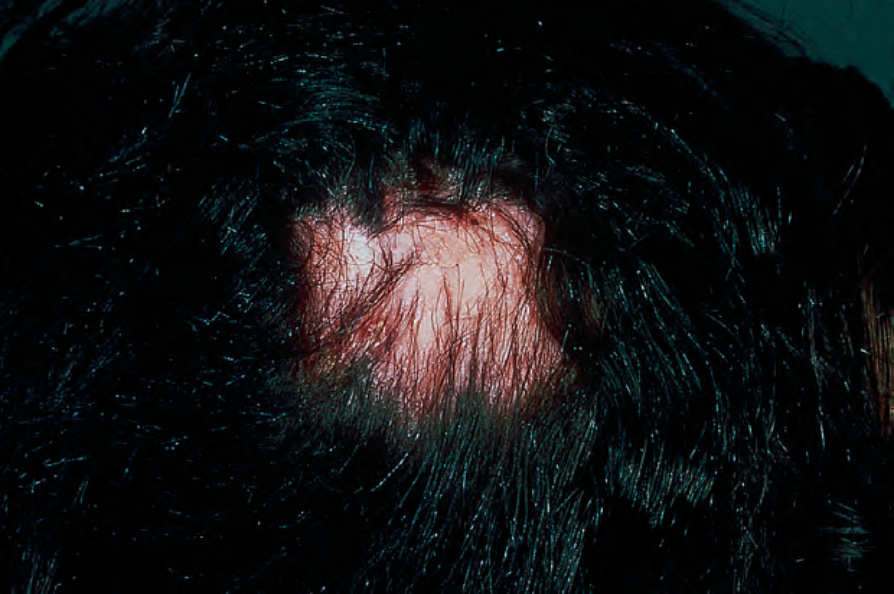
Fig. 18.272 White piedra: numerous tiny white nodules are attached to hair shafts. By courtesy of the Institute of Dermatology, London, UK.
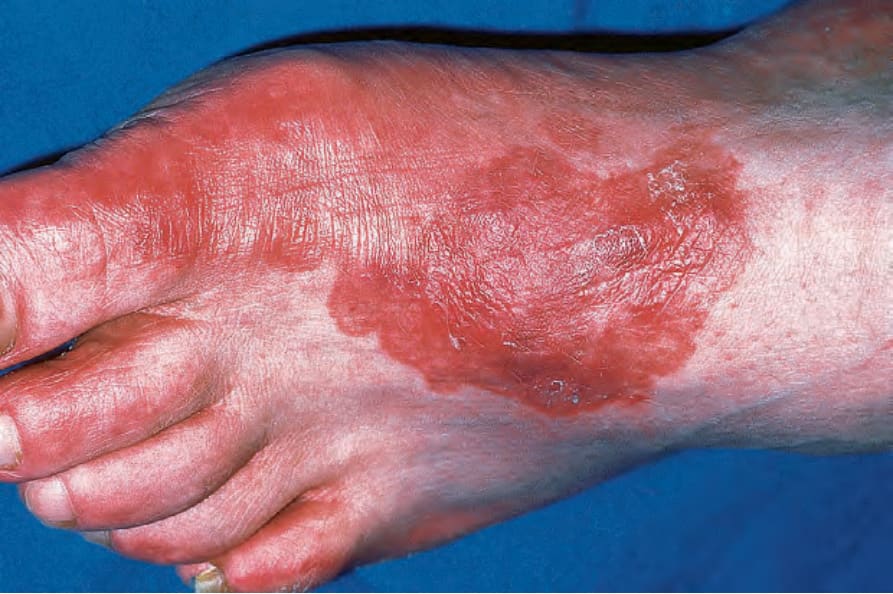
Fig. 18.277 Tinea corporis: steroid therapy may improve the clinical features with resultant masking of the true nature of the eruption (tinea incognito). By courtesy of R.A. Marsden, MD, St George’s Hospital, London, UK.