Black piedra
Black piedra
Clinical features Black piedra (Spanish piedra, stone) is caused by an ascomycete, Piedraia hortae, and involves almost exclusively the scalp.1–3 It is characterized by black nodules firmly attached to the hair shafts (Fig. 18.270). The disease mainly occurs in the tropics. Patients of all ages are affected but there is predilection for adults. There is a single case report of black piedra due to infection with Trichosporon asahii.4
Histologic features Microscopic examination reveals numerous asci and ascospores within the black nodules (Fig. 18.271). Damage of the hair at the level of the cuticle and cortex is secondary to the keratolytic activity of the organism.3
928 Infectious diseases of the skin
necrosis.14 Co-infection with Histoplasma capsulatum has been reported in this clinical context.15
Histologic features Microscopic examination of the white nodules under potassium hydroxide (KOH) shows the presence of numerous hyphae and arthrospores.
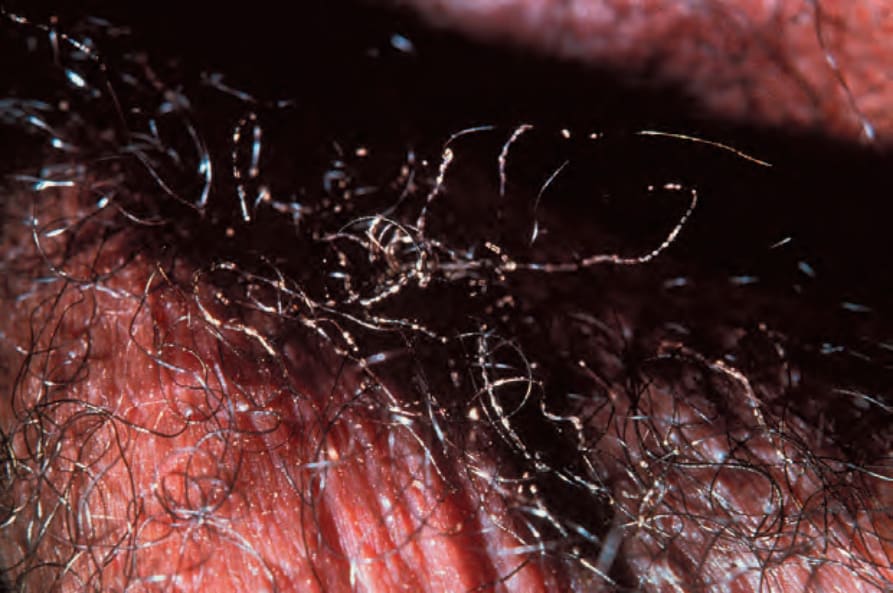
Fig. 18.270 Black piedra: there are numerous tiny black nodules attached to hair shafts. By courtesy of the late C. Kalter, MD, Walter Reed Medical Center, Washington, USA.
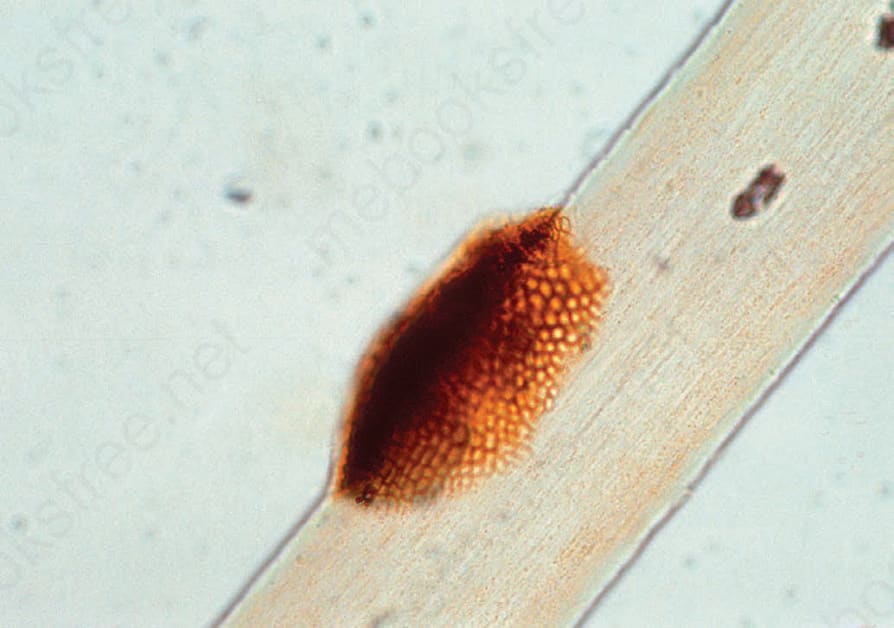
Fig. 18.271 Black piedra: close-up view of a brown nodule firmly attached to the hair shaft. By courtesy of the late C. Kalter, MD, Walter Reed Medical Center, Washington, USA.
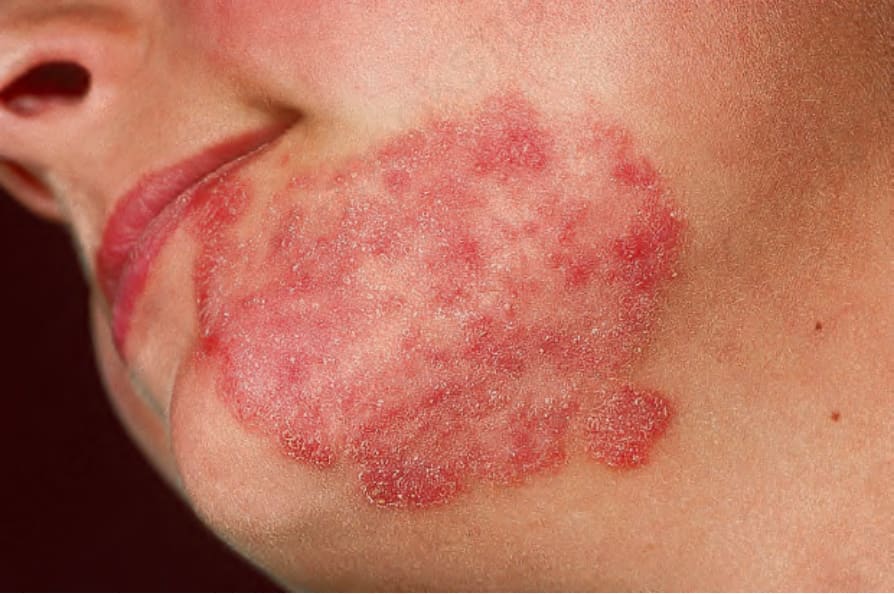
Fig. 18.273 Tinea corporis: note the sharply defined, elevated scaly border. By courtesy of R.A. Marsden, MD, St George’s Hospital, London, UK.