Kerion
Kerion
Clinical features Kerion (kerion celsi) is a severe, boggy inflammatory form of tinea, most often caused by Trichophyton interdigitale (formerly T. mentagrophytes).1–4 Additional agents of kerion are Microsporum species (e.g., M. canis) and other Trichophyton species, including, T. violaceum, T. verrucosum, and T. tonsurans.3–9 In recent years, zoophilic fungi such as Trichophyton sp. of Arthroderma benhamiae have also been implicated.4
926 Infectious diseases of the skin
Histologic features Trichophyton is a large-spored fungus with an ectothrix pattern of hair involvement. There is much associated pus with abscess formation. The epidermis is acanthotic and spongiotic, with parakeratosis and intraepidermal collections of neutrophils (Figs 18.267 and 18.268).
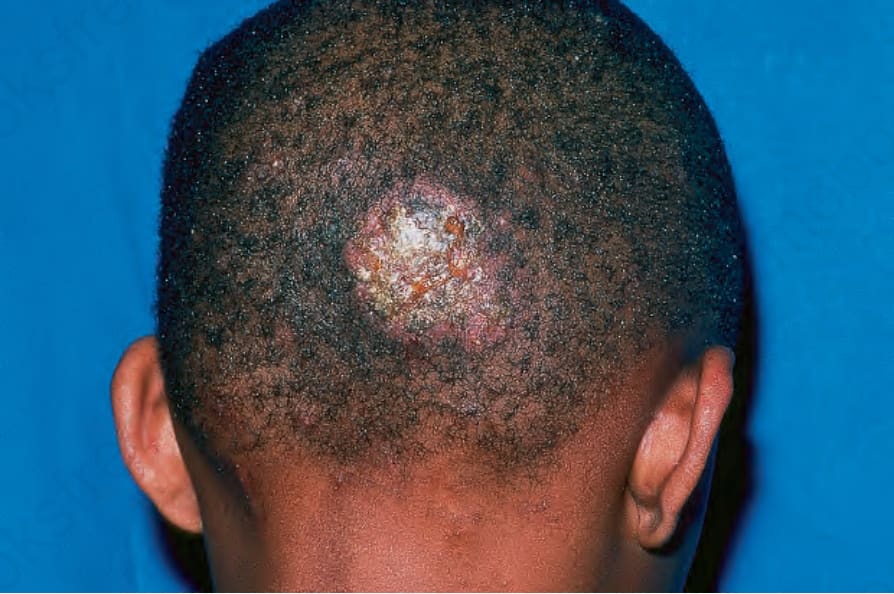
Fig. 18.264 Kerion: in addition to alopecia there is marked erythema and matting of hairs due to purulent exudate. By courtesy of R.A. Marsden, MD, St George’s Hospital, London, UK.
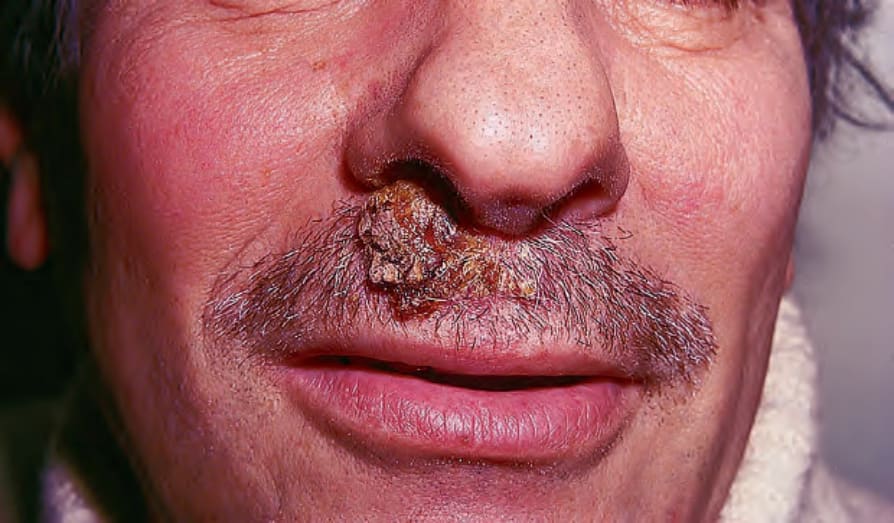
Fig. 18.266 Kerion: in males, dermatophyte infection of the beard area may also present as a kerion. By courtesy of R.A. Marsden, MD, St George’s Hospital, London, UK.
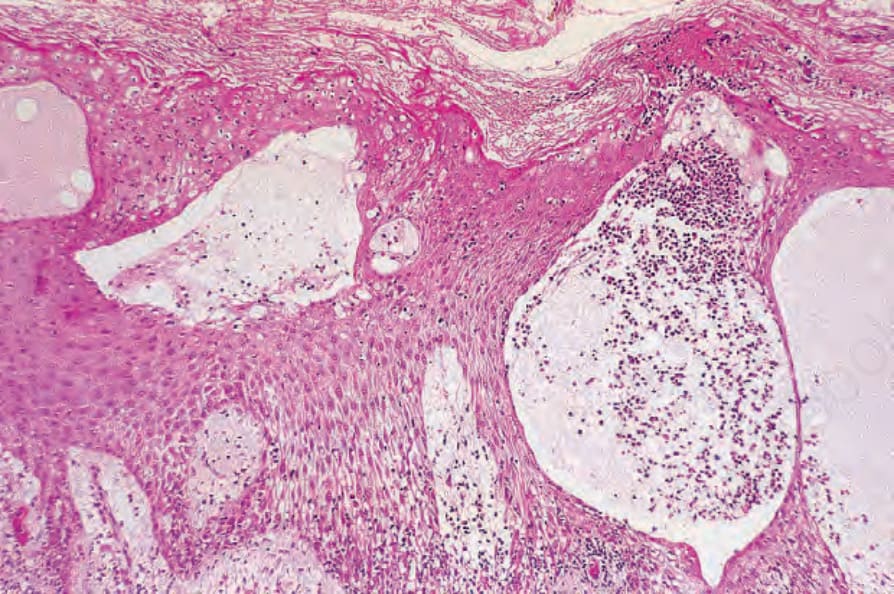
Fig. 18.267 Kerion: there is hyperkeratosis, acanthosis, epidermal edema with acute inflammation, and abscess formation.