Voriconazole
Voriconazole
Clinical features Voriconazole is a second-generation broad-spectrum triazole antifungal that acts by inhibiting fungal cytochrome 450 enzymes. It is well tolerated, and it is commonly used to treat fungal infections, particularly in immunocompromised patients. It may be associated with a number of side effects including nausea, vomiting, diarrhea, visual disturbances, cheilitis, EM, SJS, TEN, pseudoporphyria, blistering, facial erythema, and mucocutaneous retinoid-like effects.1–4 One of the most important side effects is photosensitivity, initially reported to occur in about 1–2% of patients and after long-term therapy.5–7 Photosensitivity may be more common in pediatric patients, affecting up to 20% of patients on the drug.8 Although the photosensitivity subsides when the treatment is stopped, photoaging also occurs
In company with many other sedative drugs, including chlorpromazine, imipramine, and meprobamate, barbiturates, particularly when taken in overdose, may result in blisters (coma blisters), related especially to sites of trauma.3–8
Pathogenesis and histologic features These lesions probably develop as a result of focal persistent hypoxia and ischemia due to chronic localized pressure. They may develop in a comatose patient whatever the cause. Direct toxic effect may be of importance in some patients, as similar blisters have complicated localized barbiturate extravasation.
Histologically, the blisters are subepidermal in location and are often accompanied by infarction of the overlying epidermis (Fig. 14.93). Sweat gland necrosis is characteristic.
666 Cutaneous adverse reactions to drugs
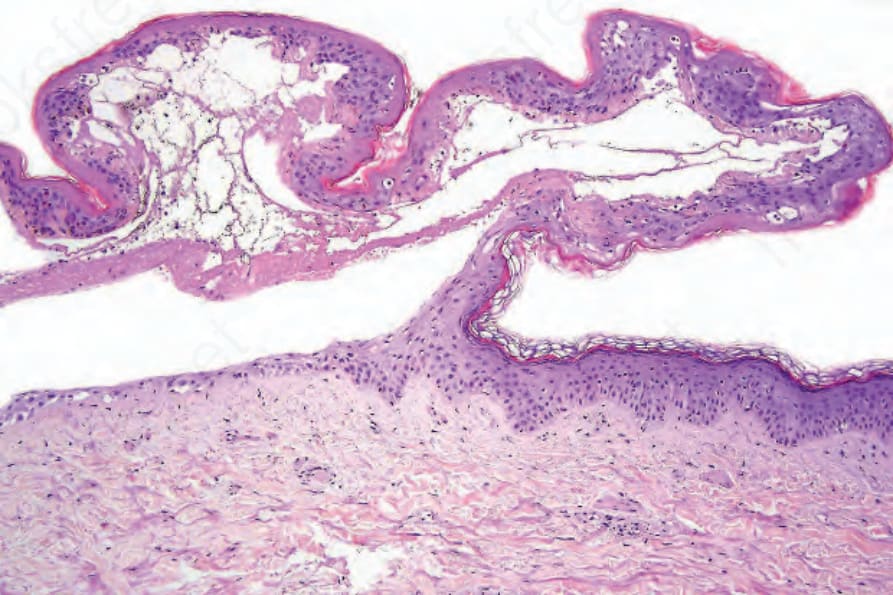
Fig. 14.93 Coma blister: there is a subepidermal blister. Re-epithelialization along the floor is present.