Poikiloderma
Poikiloderma
Poikiloderma (Gr. poikilos, spotted, mottled, varied) is a clinical descriptive term applied to skin showing slight scaling, atrophy, variable pigmentation, and telangiectasia. It is a feature of a number of conditions including lupus erythematosus, dermatomyositis, large plaque parapsoriasis, poikiloderma of Civatte, poikiloderma congenitale, Bloom syndrome, Cockayne syndrome, dyskeratosis congenita, and DNA mitochondrial syndrome-associated poikiloderma. Histologically, poikiloderma is characterized by hyperkeratosis, epidermal atrophy with basal cell liquefactive degeneration, pigmentary incontinence, telangiectasia, and a variable superficial dermal lymphohistiocytic infiltrate (Figs 7.96 and 7.97).
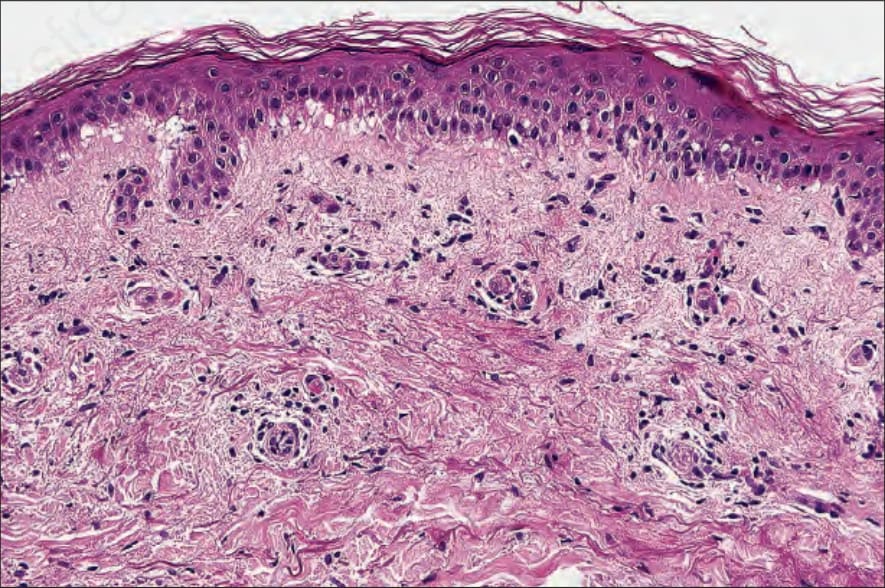
Fig. 7.96 Poikiloderma: there is basal cell hydropic degeneration and a very light perivascular lymphohistiocytic infiltrate.