橋粒 (Desmosomes)
- 表皮主要的細胞間黏附複合體,將 keratin intermediate filaments 錨定於細胞膜、連結相鄰 keratinocytes;亦見於表皮、心肌、腦膜與淋巴結皮質。
- 超微結構:細胞質側有電子緻密斑塊 (plaque),可分三帶(緊鄰質膜的緻密帶、較不緻密帶、纖維狀區);對向細胞間隙 30 nm,中央有電子緻密中線。
- 三大蛋白成分:desmosomal cadherins、armadillo 家族 (plakoglobin、plakophilin)、plakins (desmoplakin)。
- 跨膜 cadherins 為 desmogleins 與 desmocollins 的異親性結合:表皮特異性有 Dsg1–4 與 Dsc1–3,呈分化特異性表達——Dsg1/Dsc1 主要在表淺層,Dsg3/Dsc3 在基底層較強。
- Cadherins 細胞內段透過斑塊蛋白(主要 desmoplakin、plakoglobin、plakophilin)連接 keratin 網路。
橋粒相關疾病 (Desmosome-related Diseases)
- 已在 10 個橋粒基因報告自然突變,可影響皮膚、毛髮、心臟(或其組合)。
- 數種橋粒蛋白為免疫水疱病的自體抗原(如 pemphigus);paraneoplastic pemphigus 可經抗原決定位擴散 (epitope spreading) 產生多種橋粒蛋白抗體。
- Dsg1 細胞外結構域被切割 → staphylococcal scalded skin syndrome 與 bullous impetigo。
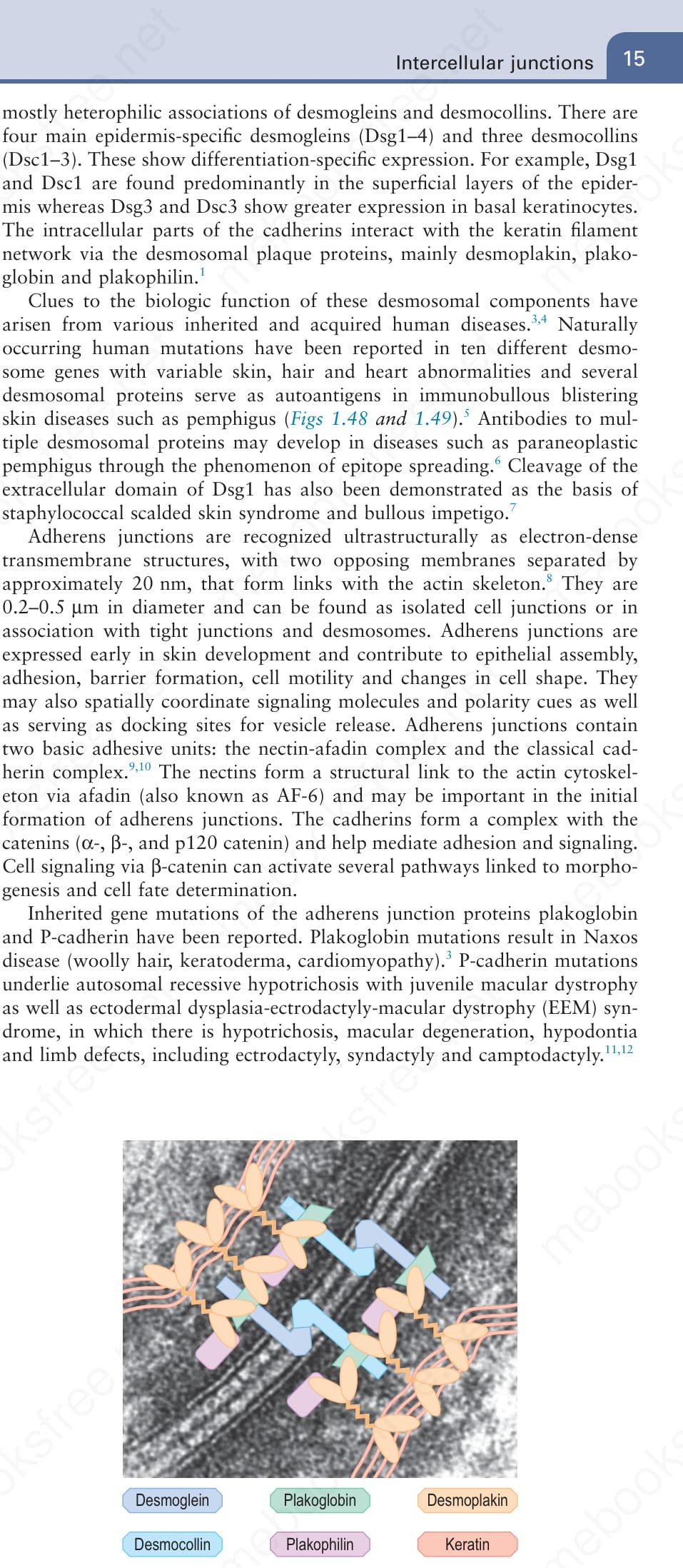
圖 1-47:相鄰角質細胞之間橋粒連接的蛋白組成——兩細胞的 keratin 網路藉橋粒斑塊蛋白與跨膜分子相連,形成結構與訊息傳遞的橋樑。
Fig. 1.47 Protein composition of a desmosome junction between adjacent keratinocytes. The keratin filament network of two keratinocytes is linked by a series of desmosomal plaque proteins and transmembranous molecules to create a structural and signaling bridge between the cells.
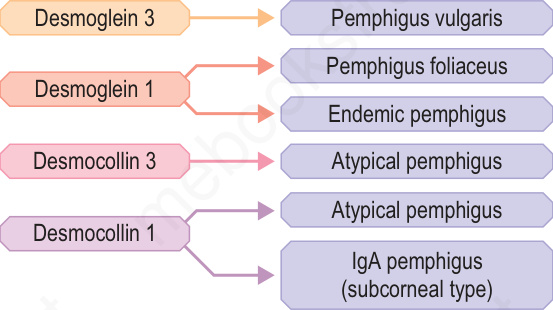
圖 1-49:橋粒的免疫水疱性疾病——表皮內水疱可由自體抗體破壞四種橋粒蛋白而生,造成不同臨床變異型的 pemphigus。
Fig. 1.49 Immunobullous diseases of desmosomes: intraepidermal blistering can arise through autoantibody disruption of four separate desmosomal proteins which leads to different clinical variants of pemphigus.
黏附連接 (Adherens Junctions)
- 超微結構為電子緻密跨膜結構,對向膜相隔約 20 nm,與 actin skeleton 連結;直徑 0.2–0.5 µm,可單獨存在或伴 tight junctions、desmosomes。
- 功能:上皮組裝、黏附、屏障形成、細胞運動、細胞形狀改變;並協調訊息分子/極性線索、作為囊泡釋放停泊位點。
- 兩基本黏附單元:nectin-afadin complex(nectins 經 afadin/AF-6 連結 actin,可能主導初始形成)與經典 cadherin complex(cadherins 與 α-、β-、p120 catenin 結合);β-catenin 訊息可活化形態發生與細胞命運決定路徑。
黏附連接的遺傳疾病 (Inherited Adherens Junction Disorders)
- Plakoglobin 突變 → Naxos disease(woolly hair、keratoderma、cardiomyopathy)。
- P-cadherin 突變 → 體染色體隱性 hypotrichosis with juvenile macular dystrophy,及 ectodermal dysplasia-ectrodactyly-macular dystrophy (EEM) syndrome(hypotrichosis、黃斑退化、hypodontia 與肢體缺陷如 ectrodactyly、syndactyly、camptodactyly)。
緊密連接 (Tight Junctions)
- 貢獻皮膚屏障完整性與細胞極性;單純上皮中為通透性主要調節者,調節水溶性分子的旁細胞通量 (paracellular flux)。
- 主要結構蛋白為 claudins(約 24 亞型)、IgG 樣家族 JAMs 與 occludin 群;表皮中以 claudin 1 與 4 為主,可結合細胞內 ZO-1、ZO-2、ZO-3(與 actin 互動)。
- 異常可累及皮膚、腎、耳、肝;claudin 1 突變 → 瀰漫性 ichthyosis、hypotrichosis、疤痕性禿髮 (scarring alopecia)、硬化性膽管炎 (sclerosing cholangitis)。
間隙連接 (Gap Junctions)
- 由細胞間通道叢集 connexons 構成,連通相鄰 keratinocytes 細胞質;connexon 由 6 個 connexin 次單元在 Golgi 組裝,運至質膜後與對向 connexon 結合(homotypic 或 heterotypic)。
- 迄今描述 13 種人類 connexins,分 α、β、γ 三群(依基因結構/同源性/序列基序);另有 pannexins(與非脊索動物 innexins 相關)。形成與穩定性受 protein kinase C、Src kinase、鈣濃度、calmodulin、cAMP、局部 pH 調節。
- 功能:共享低分子量代謝物 (< 1000 Da) 與離子交換,對細胞同步、分化、生長及無血管器官(含表皮)代謝協調至關重要。
- 低分子量 connexins(Cx26、30、30.3、31)突變 → 多種 keratoderma 及/或聽力喪失;高分子量 connexins(Cx32、40、43、46、50)突變 → 非皮膚科疾病。
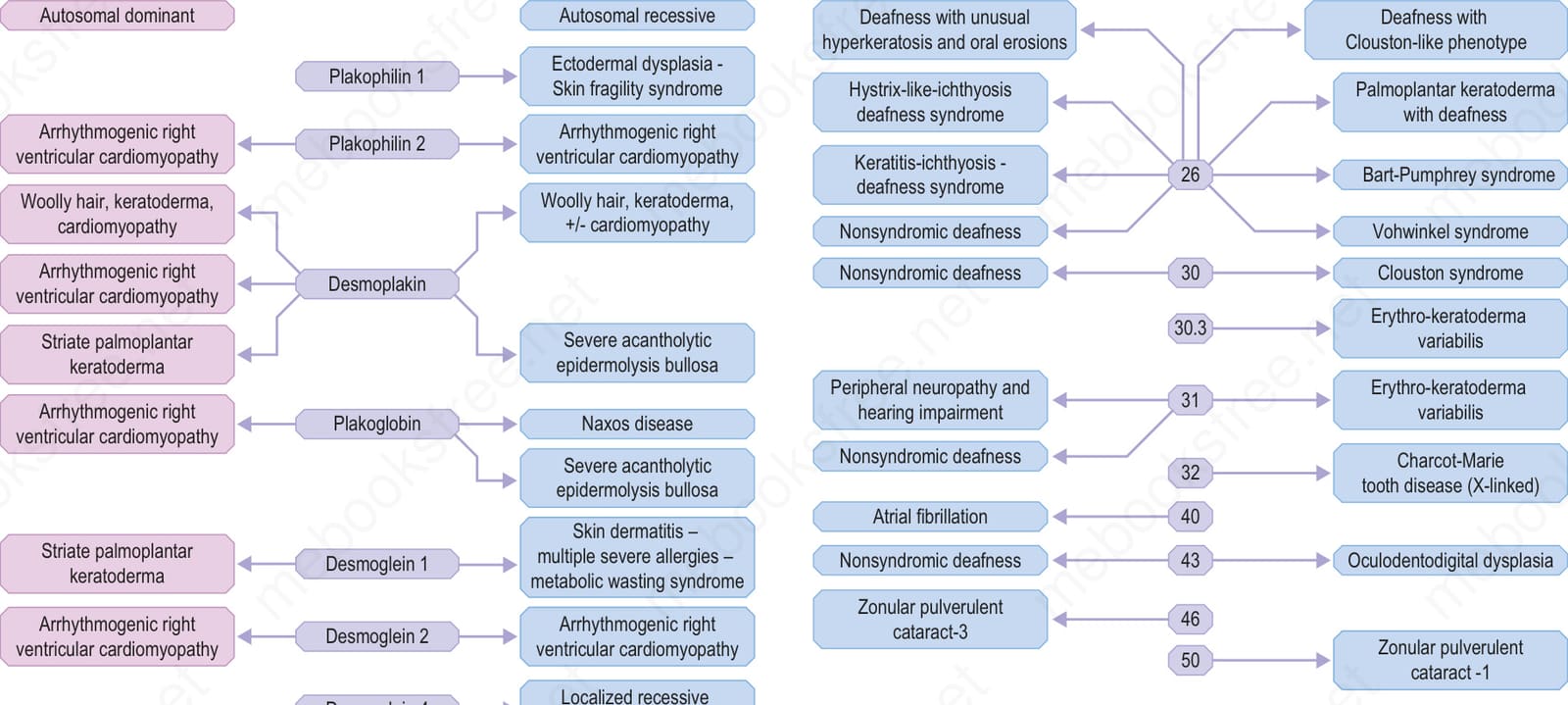
圖 1-50:connexins 的遺傳性疾病——九種人類 connexin 分子與不同遺傳病相關;圖上方四種低分子量 connexins 的突變與一系列皮膚病理相關。
Fig. 1.50 Genetic disorders of connexins: nine different human connexin molecules are associated with different inherited diseases. Mutations in the four low molecular weight connexins shown at the top of the diagram are associated with a spectrum of skin pathology, as highlighted.