概論 (Overview)
- 皮膚兼具先天 (innate) 與後天 (adaptive) 免疫,以防禦病原並預防感染;同時也容許特定微生物定殖。
- 免疫由三大支柱構成:抗菌胜肽 (antimicrobial peptides)、表皮 Langerhans cells、真皮免疫哨兵 (macrophages / T cells / dendritic cells)。
抗菌胜肽 (Antimicrobial Peptides)
- 皮膚的主要免疫反應之一即抗菌胜肽的合成與釋放(Fig. 1.32),對細菌、病毒、真菌皆有抗微生物作用。
- 種類數十甚至上百種,包括 cathelicidins、β-defensins、substance P、RANTES、RNase 2/3/7、S100A7。
- 分層分布概念:
- Stratum corneum — 由 S100A7 (psoriasin) 維持的化學屏障,對殺死 Escherichia coli 特別有效(組成型 constitutive)。
- 其下層 — RNASE7,廣譜,尤其針對 enterococci(可誘導型 inducible)。
- 活細胞層 (living layers) — β-defensins 等。
- 作用機轉:獨特結構可破壞微生物細胞膜,同時保全人類細胞膜。
- 兼具免疫刺激/調節能力,並對白血球與發炎細胞具趨化性。
- Alarmins:部分胜肽透過趨化、血管新生、生長因子與免疫抑制活性傳遞宿主反應訊號;可促進屏障修復與發炎細胞招募。
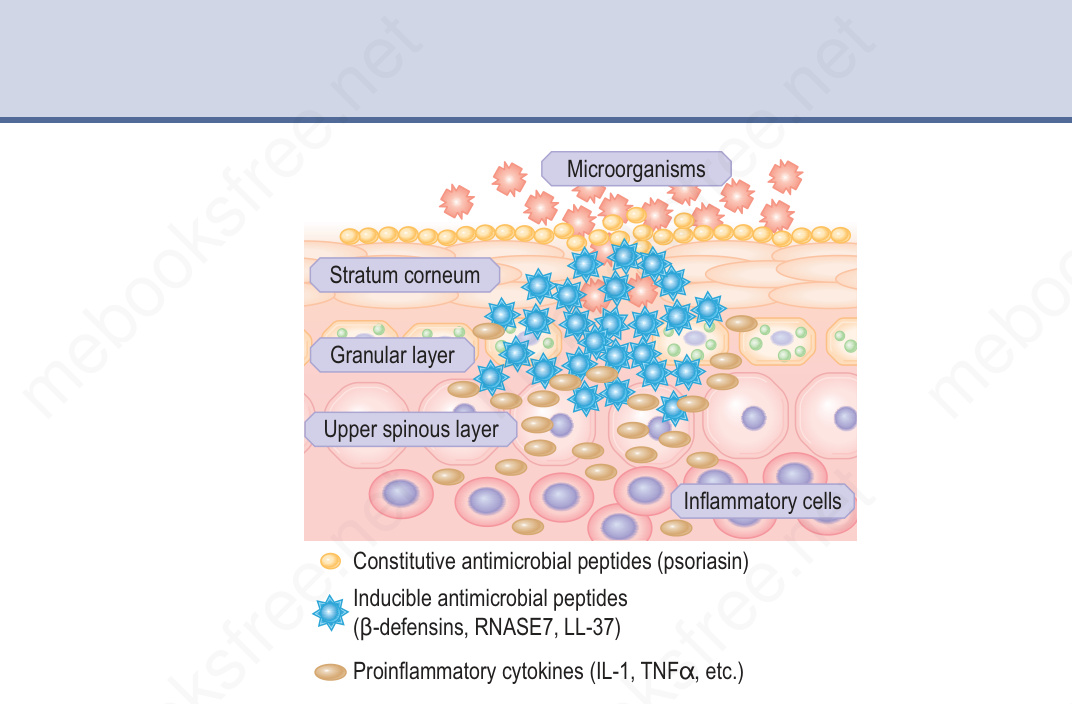
圖 1-32:皮膚的先天免疫 — 物理屏障由針對細菌、病毒、真菌的先天免疫反應補足,含組成型 (constitutive) 與可誘導型 (inducible) 抗菌物質。
Fig. 1.32 Innate immunity in the skin: the physical barrier is complemented by an innate immune response that targets bacteria, viruses and fungi and prevents them from invading the skin. These peptides include constitutive and inducible substances against a broad range of organisms.
Langerhans 細胞 (Langerhans Cells)
- 表皮中獨特的抗原呈現細胞 (antigen presenting cells),屬樹突狀細胞;最早由 Langerhans 以 gold chloride 染色證實。
- dSEARCH (Dendrite Surveillance Extension And Retraction Cycling Habitude):無刺激時樹突在細胞間隙節律性伸縮;遇抗原時 dSEARCH 增強,並與相鄰 Langerhans cells 直接接觸,作為表皮內巨噬細胞吞噬抗原。
- 分布於整個表皮,向上達顆粒細胞層;受刺激後經 lymphatics 遷移至區域淋巴結。
- 在淋巴結副皮質區 (paracortical region) 將表面蛋白呈現給 T 淋巴球,誘發單株增殖 (clonal proliferation)。
- 與 macrophages、dermal dendrocytes 共同組成皮膚的單核吞噬細胞系統 (mononuclear phagocyte system)。
- 電鏡特徵:分葉狀核、相對透明胞質、發達 ER / Golgi / lysosomes;特徵性桿狀或網球拍狀 Birbeck 顆粒(Fig. 1.34)— 屬內體再循環區室次區域,於 Langerin 堆積處形成。
真皮免疫監視 (Dermal Immune Surveillance)
- 真皮以 macrophages、T cells、dendritic cells 執行免疫監視;表皮被破壞時提供快速免疫後援以恢復恆定。
- 常駐 T 細胞數量龐大:約 2 × 10^10 個,為循環血液中 T 細胞的兩倍。
- Dermal dendritic cells 具強大抗原呈現能力,或可發展為 CD1a 陽性與 Langerin 陽性細胞。
- 真皮免疫哨兵可切換三種模式:抗原呈現 (antigen-presenting)、遷移 (migratory)、組織常駐吞噬 (tissue resident phagocytic)。
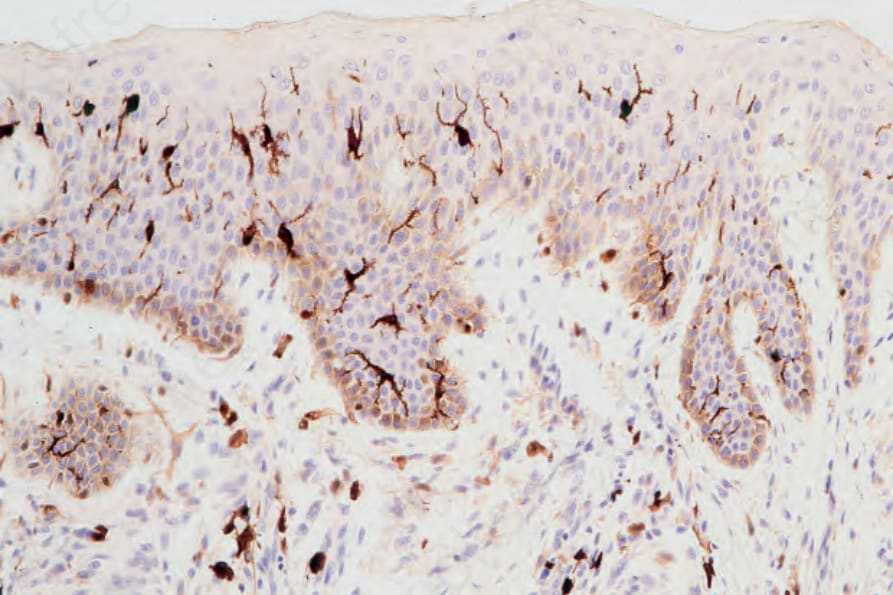
圖 1-33:Langerhans cells 表達 S100 protein,可見顯著的樹突狀突起。
Fig. 1.33 Langerhans cells express S100 protein: note the conspicuous dendritic processes.