Comedonal cyst
Comedonal cyst
Clinical features Acne, including chloracne (a condition characterized by the development of acneiform lesions in patients following exposure to the halogenated hydrocarbons), is the most common cause of comedone formation. Comedones are follicular retention cysts.1 When they open directly onto the surface, a blackhead is visible clinically (Fig. 34.11). If the ostial canal is blocked, pigmented keratin is not visible and the medium-sized whitish papule is classified as a closed comedone or whitehead (Fig. 34.12).
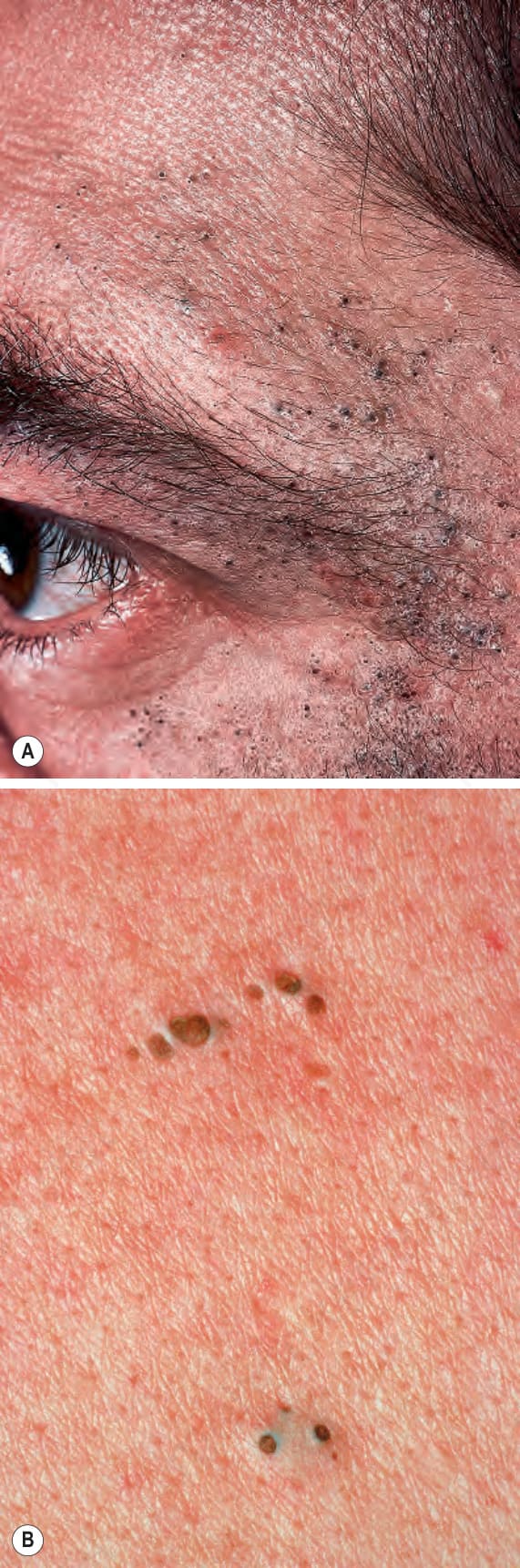
Fig. 34.11 Acne vulgaris: (A) typical open comedones (blackheads); (B) close-up view. (A) By courtesy of R.A. Marsden, St George’s Hospital, London, UK; (B) by courtesy of the Institute of Dermatology, London, UK.
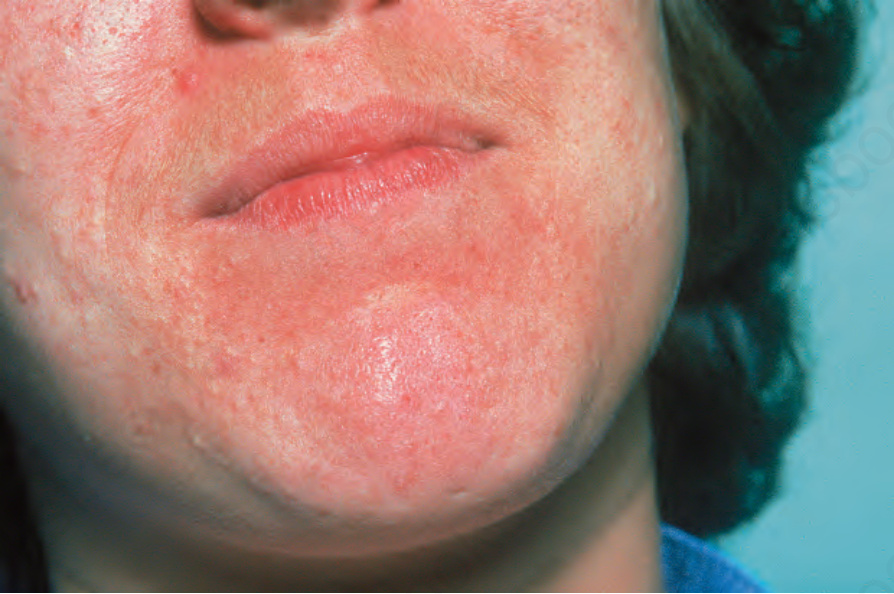
Fig. 34.12 Acne: numerous closed comedones (whiteheads) are present on this patient’s cheek and chin. By courtesy of R.A. Marsden, MD, St George’s Hospital, London, UK.