Idiopathic guttate hypomelanosis
Idiopathic guttate hypomelanosis
Clinical features Idiopathic guttate hypomelanosis is a common asymptomatic dermatosis first described in 1951.1 It is characterized by a few to numerous white macules developing on sun-exposed skin, particularly the extensor surfaces of forearms and legs of middle aged to elderly patients, with no sex predilection (Fig. 20.10).2–4 Presentation in early life is exceptional and only rarely do lesions occur on the face and trunk.5,6 Most lesions are 5 mm or less in diameter. The condition affects all races and there is some suggestion of an increased familial incidence.7 Spontaneous repigmentation does not tend to occur. Lesions identical to those seen in this disease may also be a feature of Darier disease and develop following PUVA therapy.8,9
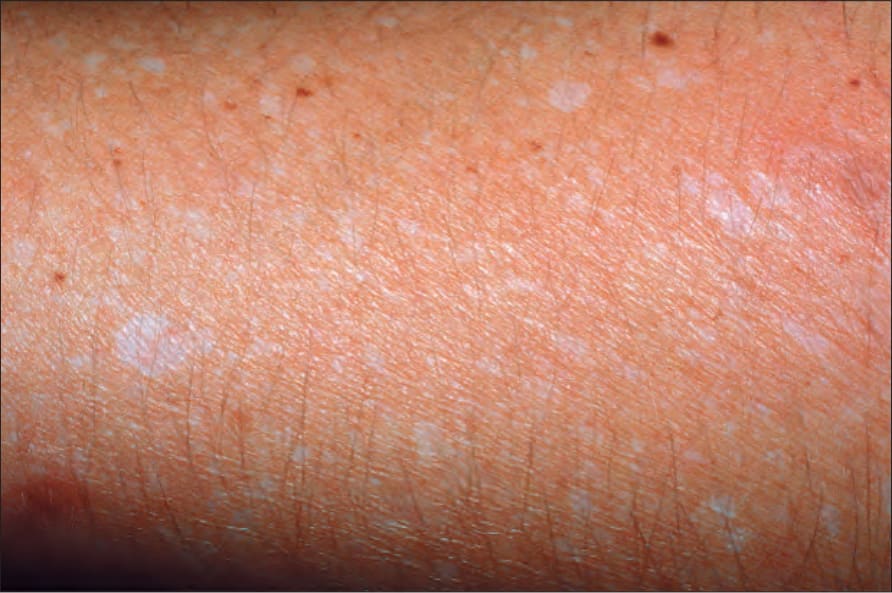
Fig. 20.10 Guttate hypomelanosis: multiple small hypopigmented macules in sun-exposed skin. By courtesy of O. Dueñas, MD, Bogotá, Colombia.