Embryology
Embryology
The anatomical position, the arrangement of all of the structures in the area, the normal histology, and some of the histopathology are explained by the embryology (Figs 12.10 and 12.11).1,2 Around the third week of fetal development, mesenchymal cells derived from the primitive streak form ridges of tissue around the cloacal membrane. These cloacal folds are joined anteriorly and cranially and form the genital tubercle. Posteriorly and caudally, they are partially joined to form an annulus. The underlying cloacal membrane is now subdivided into urogenital and anal membranes craniocaudally by about 6 weeks. During the same period, lateral genital swellings develop that will form either the scrotum or labia majora.
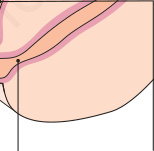
Fig. 12.10 Development of the primitive urogenital sinus. Between 4 and 6 weeks, the urorectal septum splits the cloaca into an anterior primitive urogenital sinus and a posterior rectum. The superior part of the primitive urogenital sinus, continuous with the allantois, forms the bladder. The constricted pelvic urethra at the base of the future bladder forms the membranous urethra in females and the membranous and prostatic urethra in males. The distal expansion of the primitive urogenital sinus, the definitive urogenital sinus, forms the vestibule of the vagina in females and the penile urethra in males. From Bunker C. Male Genital Skin Disease. Saunders Ltd./Elsevier 2004.