Pemphigus vulgaris
Pemphigus vulgaris
Clinical features P. vulgaris particularly affects the middle-aged (onset typically at 40–60 years of age), although occasionally (up to 2.6%) children are affected.1–8 Self-limiting neonatal disease through transplacental transfer of maternal autoantibodies has also rarely been documented (see pathogenesis).9–15 The disease begins in the mouth (Figs 5.2 and 5.3) in 50–70% of patients with painful erosions or bullae and, after a period of weeks or months, the blisters spread to involve the skin.16–22 Oral lesions most commonly affect the buccal, palatine, and gingival mucosae.1,19–23 P. vulgaris is only rarely confined to the skin.24,25
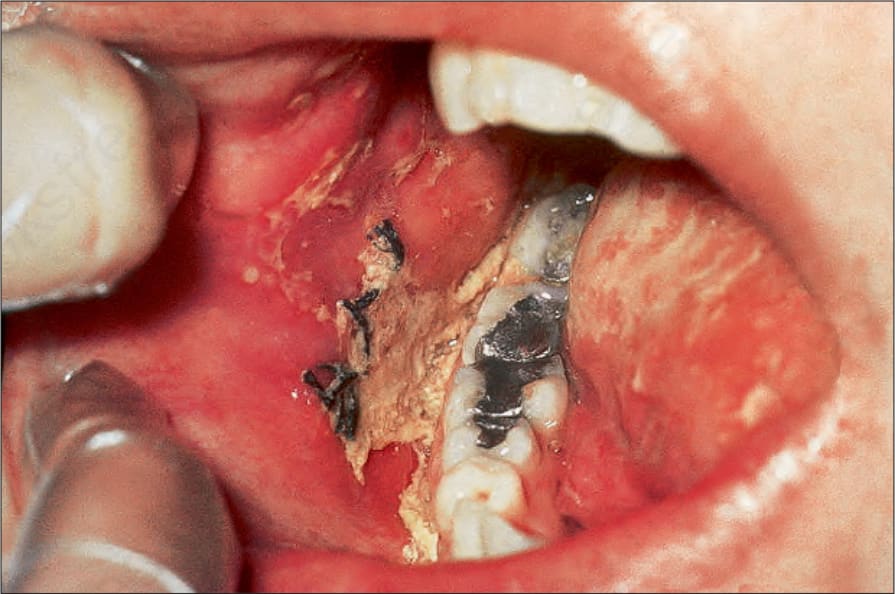
Fig. 5.2 Pemphigus vulgaris: painful erosions are present on the buccal mucosa. By courtesy of R.A. Marsden, MD, St George’s Hospital, London, UK.